

‘Friendship Group with Abkhazia’ founded in Ankara with cross-party backing
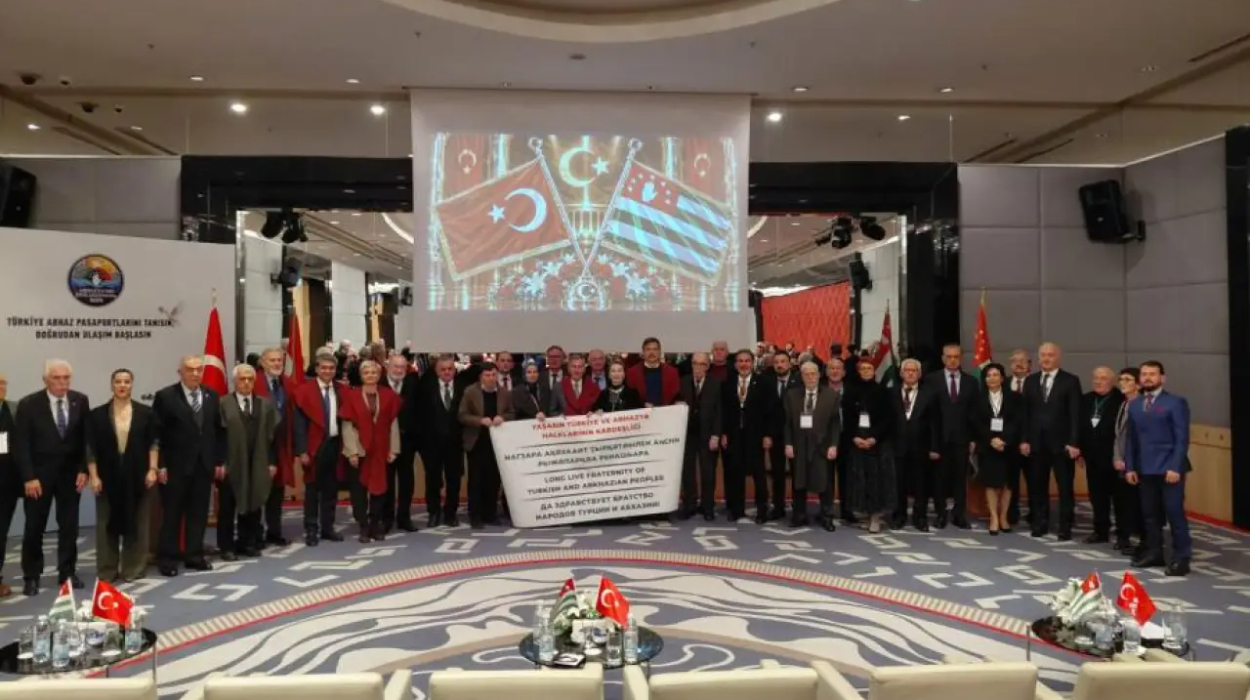
Ankara meeting founds Abkhazia Friendship Group: deputies, diaspora and Sukhum delegation call for end to isolation.
Deputies and party leaders from across the Turkish opposition met a delegation from Abkhazia on 17 November to launch the group. Its demands are the acceptance of Abkhazian passports at Turkish borders and the return of direct transport links.
The ‘Friendship Group with Abkhazia’ was founded in Ankara on the evening of 17 November. A hotel in the capital hosted the launch, which the ‘End the Isolation of Abkhazia’ Initiative put together with opposition deputies from several parties.
The group had been announced as a seven-party undertaking: New Party, the Felicity Party, the DEM Party, DEVA, the Labour Party (EMEP), the Workers’ Party of Türkiye (TİP) and New Path. Attendance on the night went wider. Turkish press accounts add the Democrat Party to that list, and one also places deputies of the İYİ Party and the New Welfare Party in the room.
The speeches
Anıt Baba, who chairs the Initiative, opened the meeting by describing 30 years of isolation as a crime against humanity and by listing Turks, Kurds, Arabs, Armenians, Syriacs, Laz, Bosniaks and Georgians among the campaign’s supporters.
For Sevda Karaca, EMEP’s deputy chair and a deputy for Gaziantep, the right to a humane life outranks any question of political status, and no people should be made a hostage of quarrels between states. TİP’s leader, Erkan Baş, dwelt on the hardship of separation and voiced the hope that an inhumane situation could be overcome jointly. A prompt move by the Foreign Ministry was the request of Ömer Faruk Gergerlioğlu, the DEM Party deputy for Kocaeli.
DEVA’s deputy chair, Mehmet Erdoğan, promised that his party would pursue the matter in the Grand National Assembly, and Mehmet Emin Ekmen, who heads the New Path group, undertook to press the passport and sea-link demands until they are met. In the view of his colleague Selçuk Özdağ, meeting those demands is an obligation shared by Russia, Georgia and Türkiye. Mehmet Altınöz, general secretary of the New Welfare Party, argued that law and justice do not belong only to economically powerful states.
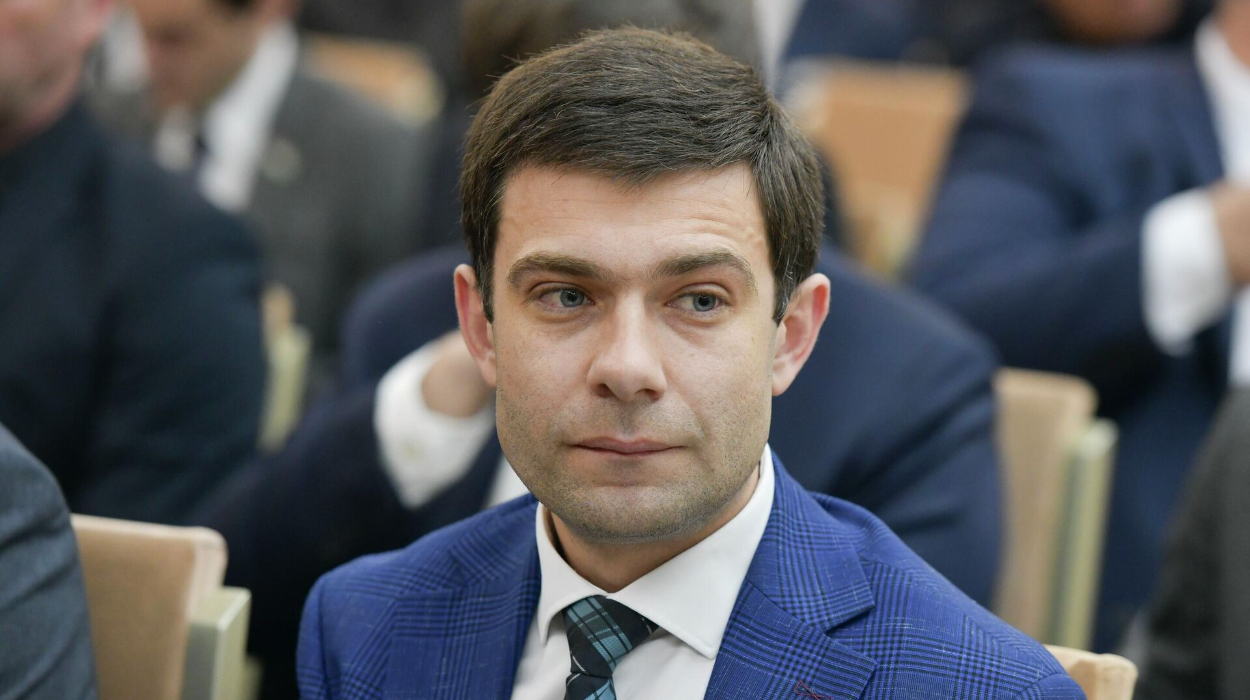
Okan Konuralp of New Party, a deputy for Ankara, introduced himself as the only member of parliament of Abkhazian descent and judged that the opposition had now done its part.
The delegation from Abkhazia
Inar Gitsba and Demur Gogia, members of the People’s Assembly, led the delegation from Sukhum. Gitsba set out three demands: the Abkhazian passport as a valid international travel document, an end to the trade embargo, and direct passenger and freight routes. Good-neighbourly relations are what Abkhazia seeks, he added, pointing out that Türkiye already supplies it with food and medicine and ranks as its second trading partner.
In an interview with Gazeta on the eve of the meeting, Gitsba had called passport recognition ‘the question most likely to be realised’, citing the practice of states that accept Kosovan, Taiwanese and Palestinian passports without recognising those who issue them.
Oktay Chkotua, a translator between Abkhaz and Turkish, recalled that Anatolia was where the Abkhazians found shelter during the deportations. Professor Cüneyt Kayaalp put health care in Abkhazia some 40 years behind Türkiye’s and spoke of equipment shortages that endanger patients’ lives. Dilara Tan, speaking on behalf of artists in Abkhazia, likened isolation to censorship.
The two who could not come
Akhra Bzhania and Aslan Kobakhia, deputies of the fifth convocation, were invited but could not travel, since neither holds a Russian passport. Bzhania sent a written address. ‘We want to develop as an independent state and to travel the world on our own national documents,’ he wrote. ‘Today, as we all sense, the time has come for the next step.’
Support and reaction
Before the meeting, the North Caucasus Civil Society Organisations Coordination Council in Istanbul published a statement signed by 24 Chechen, Ingush, Circassian, Ossetian, Karachay and Abkhazian organisations. It called on the Grand National Assembly and the Foreign Ministry to accept Abkhazian passports and restore direct sea and air links. ‘Just as we did not leave our Abkhazian brothers and sisters alone in wartime, we will continue to support them today in their just demands,’ it said.
In parliament, Mahmut Tanal, the New Party deputy for Şanlıurfa, tabled a motion on 2 November (no. 10/4987) for a parliamentary inquiry into the travel and transport problems of Abkhazians living in Türkiye.
‘The dog barks, the caravan moves on.’
Georgian diaspora organisations in Türkiye issued a statement against the initiative on the eve of the meeting. Tbilisi itself has made no official comment. Gitsba’s answer to Gazeta was a proverb: ‘The dog barks, the caravan moves on.’
The campaign began on 29 June 2026, when members of the Abkhazian diaspora in Türkiye started petitioning the Foreign Ministry through CİMER, the Presidential Communications Centre. On 5 August, opposition deputies put its demands into a joint declaration in the Grand National Assembly. Direct sea traffic between Trabzon and Sukhum ended in 1996, when Türkiye complied with the CIS embargo on Abkhazia.