


Inar Gitsba: recognition of Abkhazian passports is ‘the question most likely to be realised’
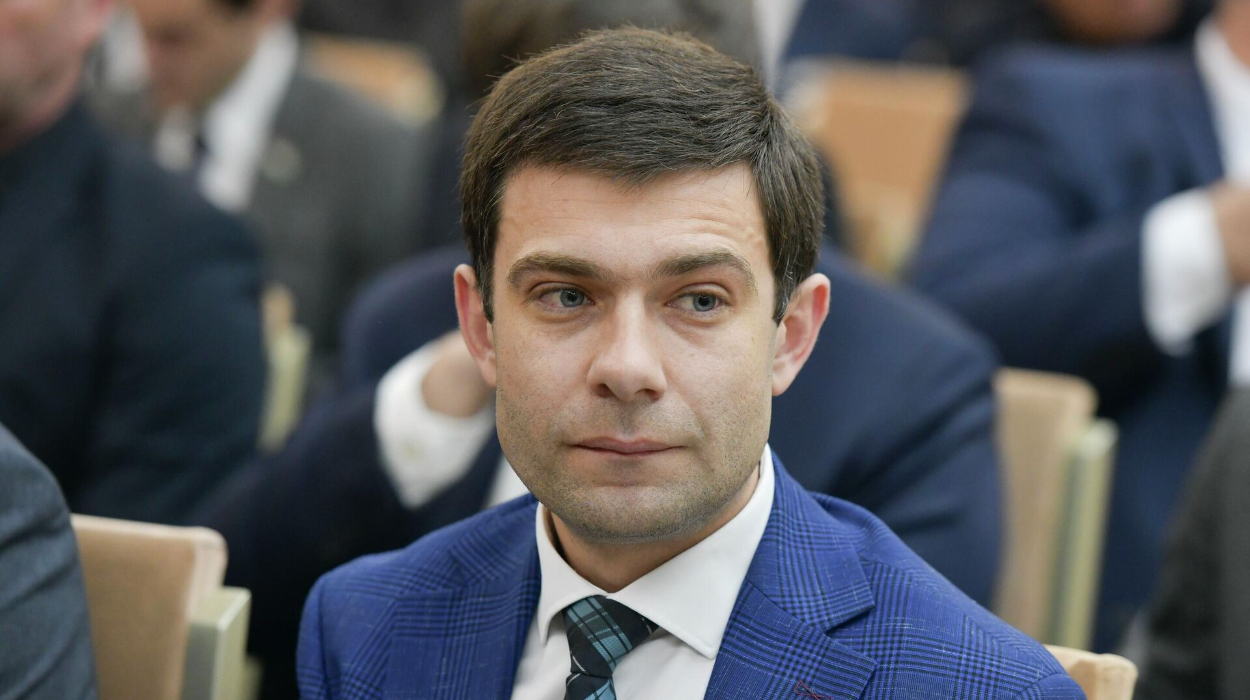
Inar Gitsba, a member of the Abkhazian delegation and a deputy of the Parliament of Abkhazia.
On the eve of the founding meeting of the ‘Friendship Group with Abkhazia’ in Ankara, deputy Inar Gitsba spoke to Gazeta about the delegation, the passport question, Georgia’s silence and Russia’s position.
A meeting to establish the ‘Friendship Group with Abkhazia’ was scheduled for 17 November in Ankara. On its agenda were the ending of Abkhazia’s isolation, the recognition of Abkhazian passports and the opening of direct routes between Türkiye and Abkhazia. The day before, Gazeta interviewed Inar Gitsba, a member of the Abkhazian delegation and a deputy of the Parliament of Abkhazia.
Gazeta: Inar, who is in the Abkhazian delegation?
Inar Gitsba: Two deputies, Demur Gogia and myself. Guli Kichba, Secretary of the Public Chamber. Gugutsa Jikirba, director of the Museum of Military Glory. Temur Rekvava, head of the Sukhum office of the World Abaza Congress. Vadim Kharazia, adviser to the chairman of the State Committee for Repatriation. Inal Khutaba, head of the department for relations with compatriots. Oktay Chkotua, a deputy of the second convocation and a member of staff at the Abkhaz Institute for Humanitarian Research. Akhra Bzhania and Aslan Kobakhia, deputies of the fifth convocation, were invited but could not travel because they do not hold Russian passports.
Gazeta: What will be discussed at the meeting in Ankara?
Inar Gitsba: This is about the ‘End the Isolation of Abkhazia’ initiative, which began as a public campaign. Signatures were collected for a petition on creating the conditions for ending Abkhazia’s isolation. Political parties backed the initiative, and so did the deputies those parties have in the parliament of the Republic of Türkiye. On 5 August they held a large press conference in the Turkish parliament and set out the main points. These are, first, recognition of the Abkhazian passport as a travel document for international journeys. Then the opening of direct passenger and freight routes with Abkhazia, and the lifting of the economic embargo.
These are the same subjects the Abkhazian delegation has been putting to the international community for many years at the Geneva International Discussions. They are basic, fundamental humanitarian rights, reflected above all in the UN Charter. They concern the daily lives of the thousands of people who live in Abkhazia.
We expect that tomorrow’s event in Ankara, a founding meeting organised by Turkish deputies from seven different parties, will announce the establishment of the ‘Friendship Group with Abkhazia’. The plan is for this body to advance the agenda at the political level. The decision on these questions rests with the political leadership of the Republic of Türkiye. That is why, at the press conference on 5 August, the deputies appealed to their country’s leadership and to parliament to support the initiative.
I would draw attention to the fact that there is ample international experience of accepting the passports of partially recognised countries as travel documents. This is not a unique situation. The passports of Palestine, Kosovo, Taiwan and a number of other partially recognised countries are accepted as travel documents. Kosovo, for example, is not recognised by five member states of the European Union, yet those states accept passports issued in Kosovo as travel documents and put visas in them. The situation with Taiwan is the same. So we, and the political forces in Türkiye that have supported this humanitarian initiative, are proposing that the Turkish leadership consider recognising Abkhazian passports on the basis of existing international practice.
Gazeta: But how realistic is this demand, or request? Türkiye has serious economic ties with Georgia, and its leadership has stated more than once that it recognises Georgia’s notorious ‘territorial integrity’.
Inar Gitsba: As the support from Turkish deputies shows, there are prospects. I consider recognition of Abkhazian passports as travel documents to be the obvious question, the one most likely to be realised. Yes, Türkiye declares its strategic partnership and alliance with Georgia, but the questions we are talking about are humanitarian in nature. Here everything depends on the political will and resolve of the Turkish leadership. In my view this does not get in the way of Türkiye’s economic contacts with Georgia, all the more so because there is international practice for countries with similar political and diplomatic difficulties. If in those cases humanitarian rights serve to secure the basic conditions of a society’s life, why are double standards applied in ours?
And then, as the saying goes, ‘no water flows under a stone that lies still’. I understand that these are difficult questions which will not be settled with the wave of a magic wand, but that is what diplomatic, political and economic instruments are for. I would add the lobbying capacity of our diaspora here in Türkiye. The moment appears to be a favourable one for making the greatest possible effort to convey the just and legitimate aspirations of the people of Abkhazia.
Gazeta: You are presumably following the situation and know of Georgia’s reaction to these initiatives?
Inar Gitsba: That statement is not a reaction from the official authorities of Georgia. It is a reaction from Georgian cultural diaspora organisations in Türkiye. It was to be expected, and it was issued on the eve of the founding meeting in Ankara. It is the standard set of clichés Georgia uses every time the subject of our external development comes up. There is nothing new or unexpected in it. ‘The dog barks, the caravan moves on.’
Gazeta: I see. The caravan moves on because the dog barks.
Inar Gitsba: And it means we are doing the right things, since every attempt is being made to restrict us.
Gazeta: Even so, why do you think Georgia’s official authorities are not reacting to the Turkish deputies’ initiative? Is it tacit consent, or disdain for the outcome?
Inar Gitsba: It is hard to say definitely. In my view it is a layer cake of different factors. One of them may be the Georgian leadership’s caution about the domestic political situation here in Türkiye. One has to understand the processes under way in Turkish domestic politics. So Georgia prefers to speak through Georgian diaspora organisations in Türkiye. They are being careful not to do harm in Türkiye’s own internal political processes.
Gazeta: And what do you know of the Russian political leadership’s reaction to the Turkish deputies’ initiative?
Inar Gitsba: I have no such information. But I would again point out that nothing here goes beyond Article 4 of the treaty between Abkhazia and Russia, which provides for a coordinated foreign policy. These are all questions we raise at the Geneva Discussions, in which, as you know, the Russian side takes part. Moreover, according to my information, the Russian ambassador to Türkiye, Mr Vershinin, has been invited to tomorrow’s event.
Gazeta: Thank you for the interview. Good luck in Ankara.