The Events of 1978 in Abkhazia, by Beslan Argun

  • History
8th Session of the Supreme Soviet of the USSR, Eleventh Convocation.

Abstract

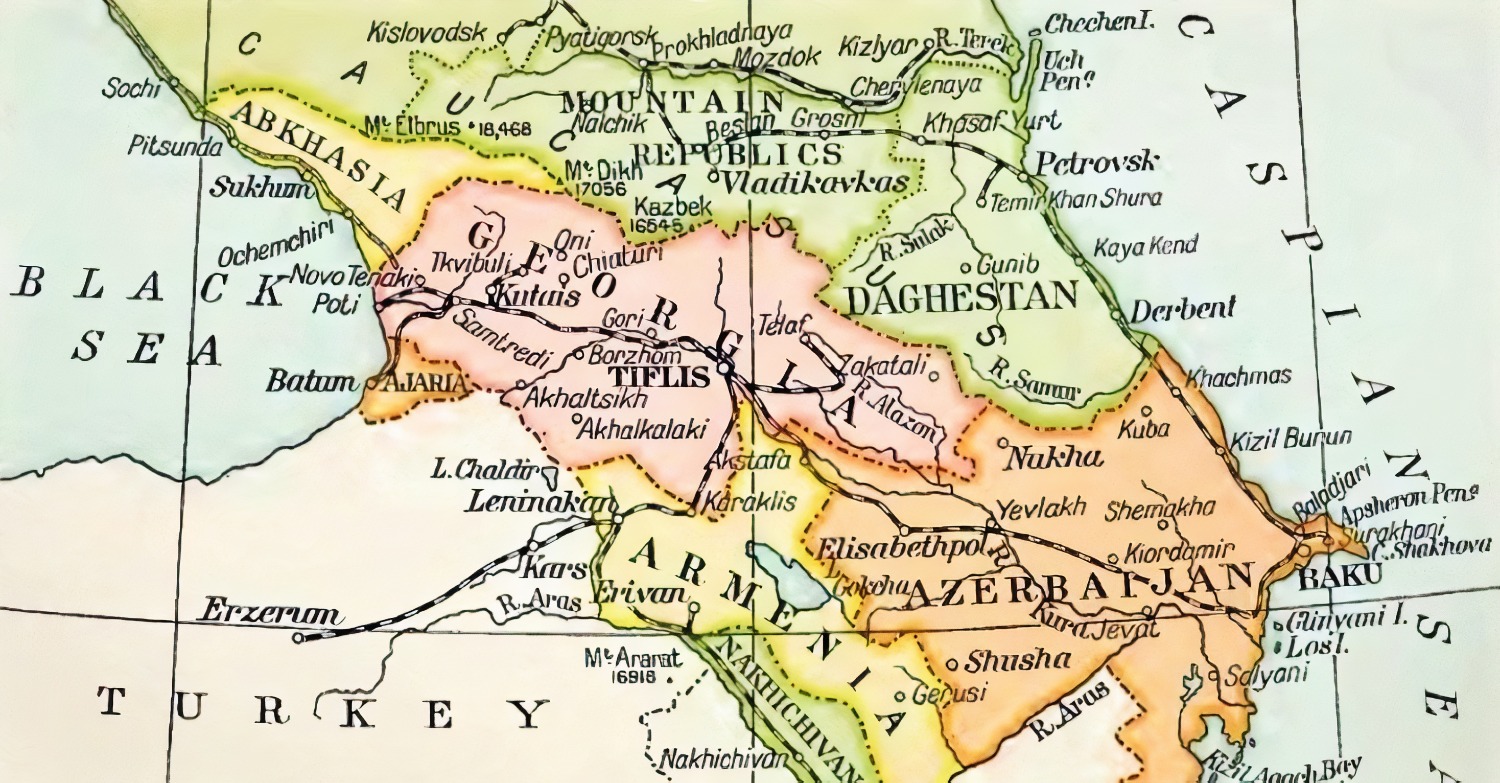
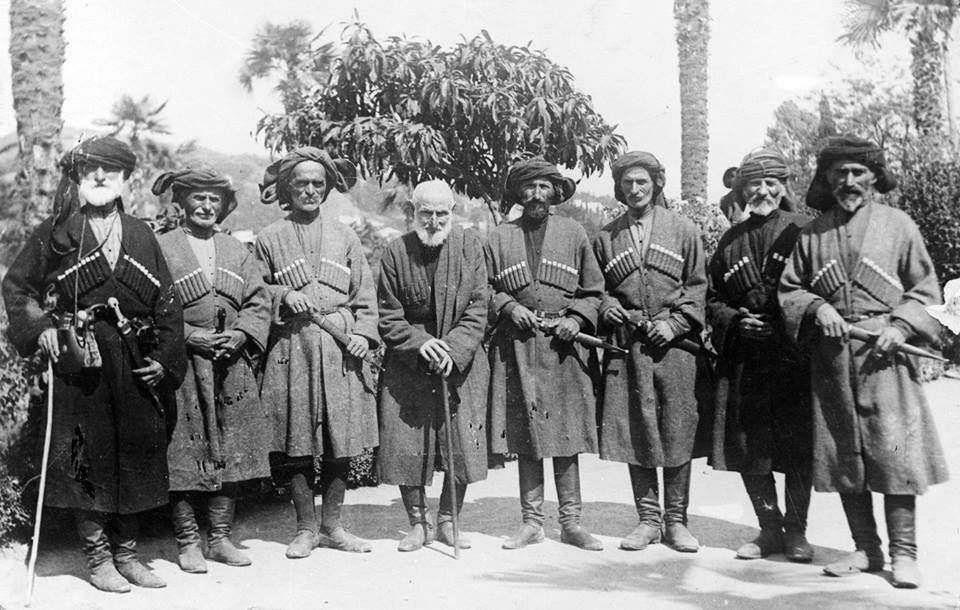
Even during Stalin’s time, some Abkhazians protested against Tbilisi’s anti-Abkhazian policies, such as renaming places and closing Abkhaz schools. In 1947, Giorgi Dzidzaria, Bagrat Shinkuba, and Konstantin Shakryl sent a complaint letter to Moscow and were later persecuted. Over the following decades, Abkhazia saw repeated unrest (1957, 1967, 1978) over Georgian rule. In 1977, 130 Abkhaz intellectuals petitioned the Kremlin to remove Abkhazia from Georgian control, leading to job losses and mass protests. Eduard Shevardnadze was sent to calm tensions, promising reforms such as a university and limited Abkhaz-language broadcasts. However, while the establishment of Abkhazian State University seemed a victory, it ultimately increased Georgian presence in Abkhazia.

(Published in: Abkhazovedenie: Istoriya, arkheologiya, etnologiya. Vypusk II. Sukhum, 2003, pp. 151–158.)

Read more …The Events of 1978 in Abkhazia, by Beslan Argun

Abkhazia and the Arab Caliphate in the First Half of the 8th Century, by Valentin Nyushkov

  • History
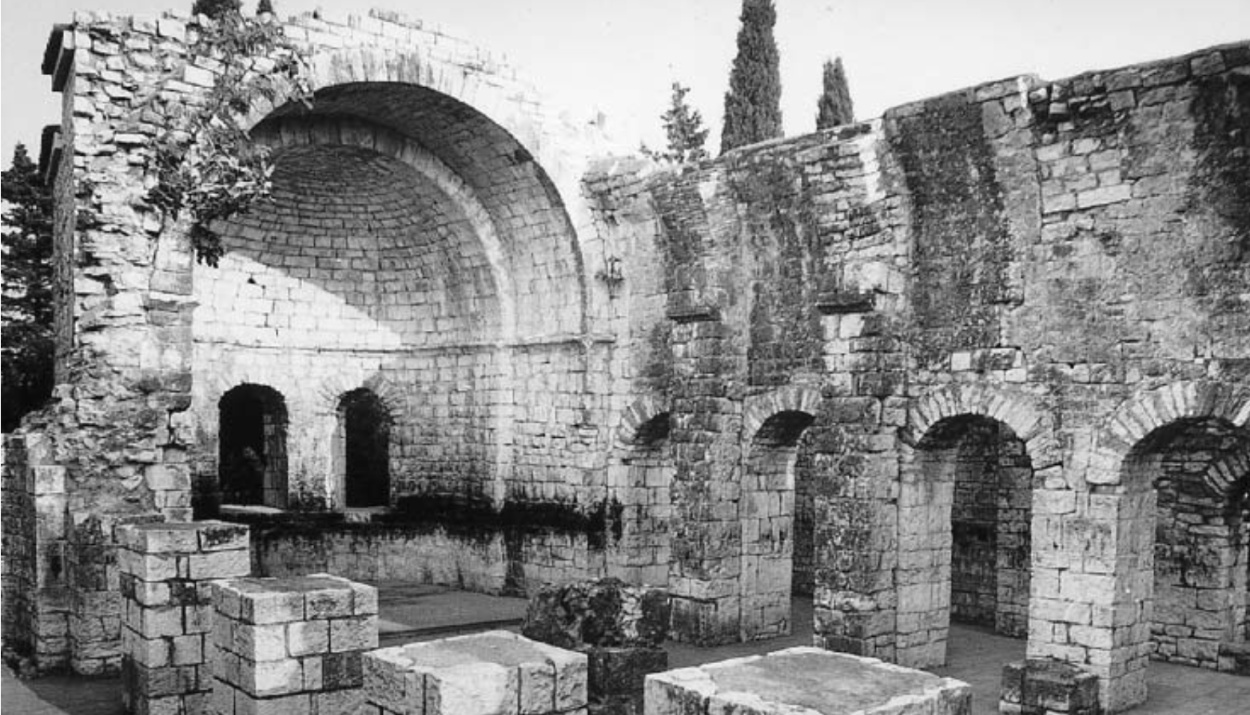
Anakopia Fortress. Anakopia was the first capital of the Kingdom of Abkhazia.

V.A. Nyushkov, 'Abkhazia and the Arab Caliphate in the First Half of the 8th Century' [PDF Version] (Абхазия и Арабский Халифат в первой половине VIII в.), from War and Peace in the History of the Caucasus , Materials of the International Scientific Conference, (Sukhum: Abkhazian Institute for Humanitarian Research, 2016).

Translated by AbkhazWorld 

V.A. Nyushkov, Sukhum

Having emerged as a result of the Muslim conquests in the 7th-9th centuries as an Arab theocratic state of an early feudal type, the Arab Caliphate surpassed the Roman Empire in size, incorporating significant territories through victorious wars. It 'began military operations beyond Arabia in the 630s, and in the same century seized Syria, Palestine, Egypt and other eastern provinces of the Byzantine Empire, subjugated Iran, and invaded North Africa, Transcaucasia and Central Asia. Within a century, it had conquered a vast territory, nominally stretching from the Atlantic Ocean and the borders of Southern France in the west to India and Western China in the east'.¹ The ideology of the Arab Caliphate was Islam. In the Middle Ages, the very word 'Arabs' meant 'Muslims'. 'All of them, at once, with a single word. It made no difference whether the peoples of Arabia, Egypt or Syria were in question. A Muslim, therefore, an Arab. Dozens of peoples became Arabs overnight'.²

Read more …Abkhazia and the Arab Caliphate in the First Half of the 8th Century, by Valentin Nyushkov

What Distiguishes Caucasian Megaliths from European Ones? By Viktor Trifonov

  • History
Coloured area – Dolmens of the Western Caucasus.

Trifonov, V. (2013). What distinguishes Caucasian megaliths from European ones? In S. Bergerbrant & S. Sabatini (Eds.), Counterpoint: Essays in Archaeology and Heritage Studies in Honour of Professor Kristian Kristiansen (pp. 321–328). BAR International Series, 2508.

Abstract:
The Caucasian dolmens represent a unique type of prehistoric architecture, constructed using precisely dressed stone blocks. These monuments date from the end of the fourth millennium to the end of the second millennium BC. Their origins remain unknown. Since the early nineteenth century, numerous hypotheses have been proposed to explain the origins of these dolmens through external migrations. Today, this search for parallels continues to be a popular endeavour, albeit sometimes at the expense of more in-depth studies focusing on the dolmens' local cultural, chronological, social, and ecological contexts.

The increasingly rigorous standards of recent excavations in the Caucasus, which encompass the entire structure of the tomb rather than focusing solely on the interiors of burial chambers, are revealing that comparisons between the plans of poorly excavated megalithic sites, whether European or Caucasian, can be dangerously misleading.

Keywords: Megalith, dolmen, reconstruction archaeology, Caucasus, Zhane Valley, Dzhubga, ashlar masonry

Read more …What Distiguishes Caucasian Megaliths from European Ones? By Viktor Trifonov

The Orthodox Church in Abkhazia: Insights from Byzantine Sources, by Archimandrite Dorotheos (Dbar)

  • History
The Byzantine Empire and 'Themata' c. 800 (Byzantium: the surprising life of a medieval empire by Judith Herrin, Princeton University Press, 2007).

The two articles, "Order of the Patriarchal Thrones" by Nilus Doxapatrius and "Exposition of the Order of Patriarchs and Metropolitans" by Epiphanius of Cyprus, are featured in the second volume of the book The Orthodox Church in Abkhazia: Past, Present, and Future by Archimandrite Dorotheos (Dbar). This significant work, published by the Holy Metropolis of Abkhazia in 2024, comprises a comprehensive collection of 94 essays, articles, and lectures written between 2011 and 2014.

Read more …The Orthodox Church in Abkhazia: Insights from Byzantine Sources, by Archimandrite Dorotheos (Dbar)

The Caucasian War: Zigzags of Russian Historiography, by Said-Khasan Muskhadzhiev

  • History
Battle with the Chechens near Akbulat-Yurt

In May 2024 (20–23 May), the Abkhazian State University in Sukhum hosted a four-day International Scientific Conference titled The Caucasian War: Lessons of History and Modernity,’ dedicated to the 160th anniversary of the end of the Russo-Caucasian War and the 110th anniversary of the renowned Abkhazian historian Georgy Alekseevich Dzidzaria (1914–1988). The conference featured scholars from Moscow, St. Petersburg, Stavropol, Grozny, Makhachkala, Cherkessk, and Maykop, who gathered to present and discuss their research on the complex history of the Caucasus.

The presentations from this conference have been published in the collection Кавказская война: уроки истории и современность (The Caucasian War: Lessons of History and Modernity). This collection is a valuable resource for historians, ethnographers, students, postgraduates, and anyone interested in 19th-century Caucasian history.

'The Caucasian War: Zigzags of Russian Historiography by Said-Khasan Muskhadzhiev, originally published in Russian and appearing on pages 130–138. This translation into English is provided by AbkhazWorld to ensure broader accessibility for an international audience.

Read more …The Caucasian War: Zigzags of Russian Historiography, by Said-Khasan Muskhadzhiev

More About Abkhazia (Excerpt from a letter to A.P. Berge), by K. Chernyshev (1854)

  • History
Illustration by Abkhazian artist Batal Dzhapua based on Maadan's story 'Aguzba Smail' (2024).

This article, originally written by K. Chernyshev and addressed to A.P. Berge, provides a detailed account of Abkhazia's geography, social structure, and customs, as observed during the author’s year-long stay in the region. In addition to his impressions of Abkhazian social life, Chernyshev interprets certain issues, such as the role of women and religious beliefs, sometimes according to his own understanding. Although his comments are coloured by personal prejudices and sometimes lack of information, the article provides invaluable historical and ethnographic insights into 19th-century Abkhazia, offering a rare glimpse into its complex social structures and cultural practices. 

The article was first published in Newspaper Kavkaz (Кавказ (газета)) in October 1854, issues No. 81, 82, and 83, and has been translated into English by AbkhazWorld.

Read more …More About Abkhazia (Excerpt from a letter to A.P. Berge), by K. Chernyshev (1854)

Country

News

Articles & Opinion

Publications

Abkhaz World

Follow Us