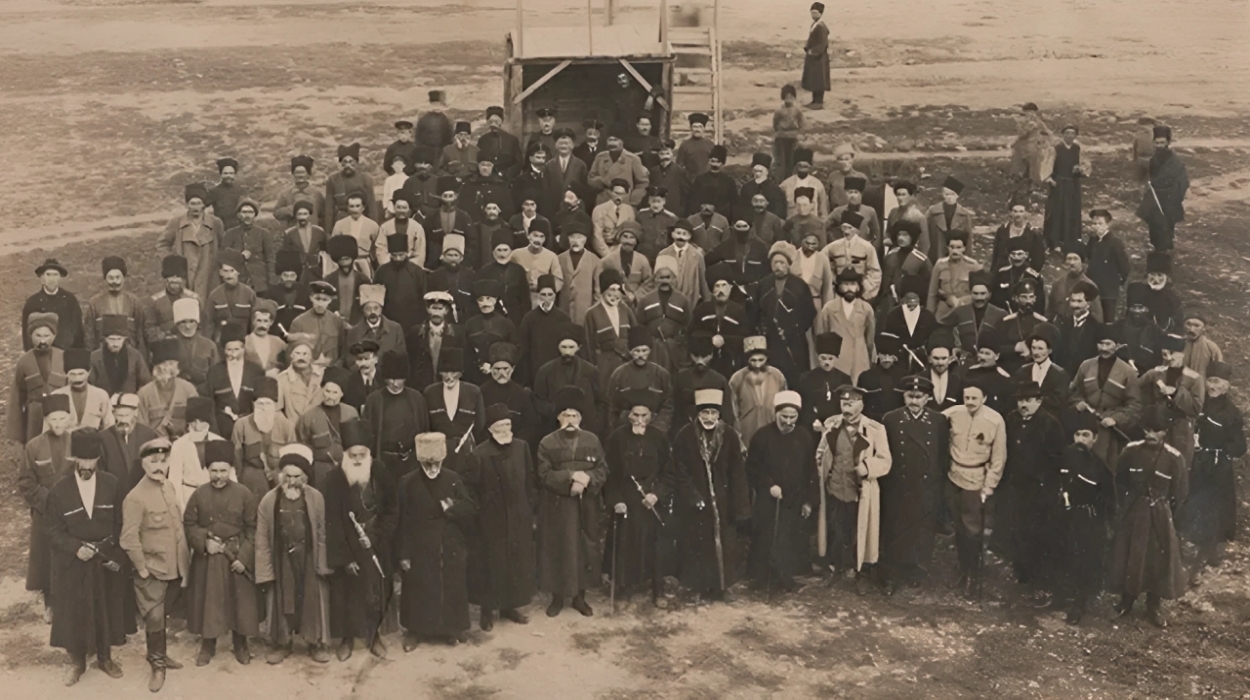
This article was first published on March 1, 2023 in Russian in the Athens-based Greek diaspora newspaper "Aфинский Kурьер" No. 4 (1059) in the section "ГРЕЧЕСКИЙ СУХУМСКИЙ ВЕСТНИК" (No. 201). Марика Миккор. "Основание села Эстонка на берегу реки Кодор в конце царской эпохи."
The revolutions of February and October 1917 and the civil war and war of intervention that followed created completely new conditions for the realisation of national ambitions. The numerically small Abkhaz people had a number of potential allies among whom they were able to choose: Russia, Turkey, union with the “Mountain Peoples’ Republic of the North Caucasus”, the “Transcaucasian Federation”, or the Georgian Republic.
English translation by H.G. Dewing (In Seven Volumes)
Harvard University Press - London 1963
from page 135:
Now there is a place beyond the boundary of Apsilia on the road into Abasgia of the following description: a lofty ridge runs out from the Caucasus, and gradually sinks, as it runs along, to a lower level, resembling in a way a ladder, until it comes to an end at the Euxine Sea. And the Abasgi in ancient times built an exceedingly strong fortress of very considerable size on the lower slope of this mountain.
Cem Kumuk Independent Researcher and Author on the history of the Caucasus. Turkey.
Abstract
Abkhazia and Georgia have confronted each other in every period when the cards were shuffled in the history of the Caucasus. One of these challenges came at a time when the Romanov dynasty in Russia was ending and the independence-hopes of the peoples of imperial Russia were blooming. Including many Georgian intellectuals and politicians, large Caucasian masses idealised a Great Caucasian Confederation as the only solution to save the Caucasus from Russian imperialism. However, the chauvinistic Georgians, who could not understand that they could not be free until the whole Caucasus was liberated, again played a facilitating role in Russia's domination of the Caucasus. We witnessed a similar scene when the Union of Soviet Socialist Republics was disintegrating in 1991. The events that this article reveals and which took place between the years 1918-1921 will sound extremely familiar to those who have witnessed what has happened since 1991 in Abkhazia, because the path followed by the chauvinist Georgian policies in the period after 1991 was not very different from the path followed in the period of 1918-1921. The article aims to draw the attention of the reader to the exemplary resemblance between what happened during the period of the existence of an opportunity for independence when the Russian monarchy collapsed and the experiences of the recent past and the present. Those who have witnessed the last thirty years will understand the striking similarity between the period on which the article focuses and what is happening today, and how historical scholarship sheds light on our future.
This article has been written in Russian and is translated into English.
Vadim M. Mukhanov Head of Caucasus Department of The Institute of World Economy and International Relations of the Russian Academy of Sciences (IMEMO). Russia.
In 1917, i.e. in the first revolutionary year, when everyone was just beginning to live according to the new rules, the principle of territorial demarcation in Transcaucasia was recognised to be based on ethnicity (which was associated with the economic needs of the people and topographical conditions). This is what was accepted and supported by the main political forces in the region (in particular, the representatives of the Georgian Social Democratic and Social Federalist parties took a similar position). Striking confirmation of this is one of the programme-statements of the Social Democratic Party, which emphasised that “the boundaries of territorial self-government are established on the principle of the real settlement of one or another nationality, while economic and living conditions are taken into account. When shifting national borders, a referendum of those areas that are disputed in determining borders is to be applied”. This principle did not cause heated debates and discussions at numerous meetings and commissions either during that fateful year or until the declaration of independence in the late spring of 1918 (that is, the period of the Provisional Government and the united Transcaucasian Republic).